
The Fascinating World of Artificial Intelligence and Its Impact on Our Lives

Artificial Intelligence (AI) is more than a buzzword; it is a transformative force that's rapidly changing our lives. From self-driving cars to smart home devices, AI impacts how we live, work, and engage with the world around us. But what drives this interest in AI? In this blog post, we will investigate different aspects of artificial intelligence, explore its applications, and examine its profound impact on our daily lives.
Understanding Artificial Intelligence
At its core, artificial intelligence is the simulation of human intelligence in machines designed to think and learn like us. This includes various technologies such as machine learning, natural language processing, and robotics. The goal is to create systems capable of performing tasks like understanding language, recognizing patterns, and making decisions—skills traditionally requiring human intelligence.
While AI is not new, its recent advancements are remarkable. For example, AI applications are estimated to save the healthcare industry over $150 billion by 2026. This potential for efficiency spurs excitement and investment in AI technologies across industries.
The Applications of AI
Healthcare
AI is making waves in the healthcare sector. Algorithms can analyze medical data to diagnose diseases, predict outcomes, and personalize treatments. For example, a study showed that AI systems can detect breast cancer in mammograms with a 94.6% accuracy rate, significantly improving early detection and patient survival.
Furthermore, AI is helping medical professionals streamline their workflows. By reducing the time doctors spend on administrative tasks, AI enables them to engage more meaningfully with patients, leading to better care.
Transportation
AI is revolutionizing transportation, particularly through autonomous vehicles. Self-driving cars use AI to navigate, interpret traffic signals, and make instant decisions. This technology could reduce traffic accidents, which account for about 1.3 million deaths globally each year, primarily due to human error.
Additionally, AI optimizes logistics and supply chain management. Companies like Amazon are leveraging AI to predict demand and automate inventory management, leading to efficiency gains and an estimated 30% reduction in operational costs.
Education
In education, AI reshapes how students learn and teachers instruct. Intelligent tutoring systems can adapt to individual learning preferences, providing tailored feedback. For instance, Gradescope, an AI-driven grading tool, has reported reducing grading time by up to 50% for teachers.
AI also supports educators in administrative tasks, allowing them to invest more time in personal student interactions and mentorship. This shift empowers both students and teachers to create a more engaging learning environment.
The Impact of AI on Daily Life
Smart Homes
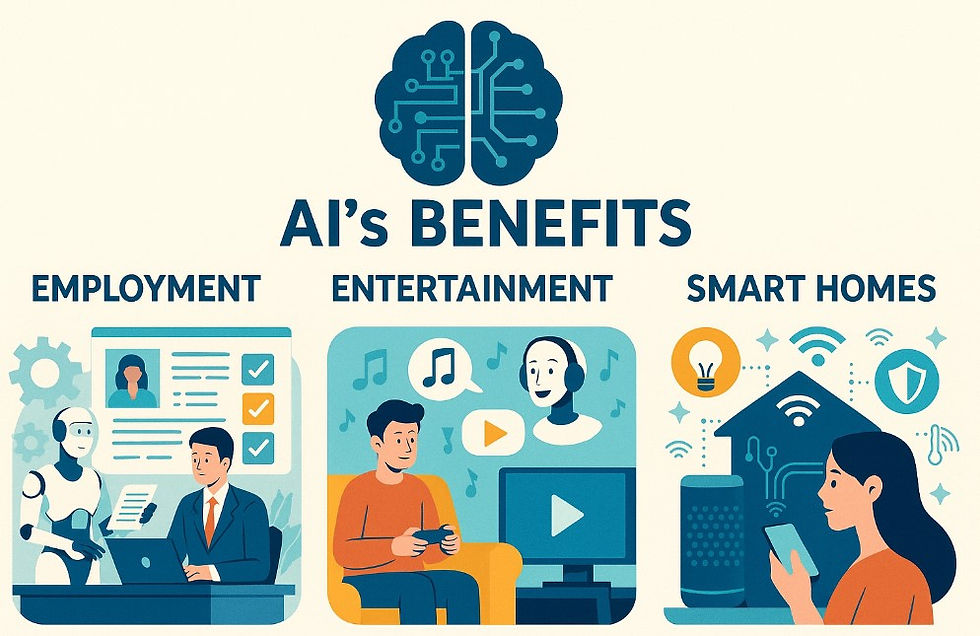
AI has infiltrated our homes, enhancing daily life with smart devices. Voice-activated assistants like Amazon's Alexa can automate routine tasks, while smart thermostats learn our schedules to optimize energy usage—potentially saving households 10-15% on heating and cooling costs annually.
These smart devices streamline our living environments, providing reminders and seamlessly controlling other appliances. The result is a more efficient and convenient home life.
Entertainment
AI is also reshaping the entertainment sector. Streaming services like Netflix and Spotify utilize AI to analyze user behaviors and preferences, resulting in content recommendations that improve user retention. Reports indicate that personalized recommendations can account for up to 80% of the content watched on these platforms.
Moreover, AI is contributing to content creation itself. Platforms like Amper Music allow users to create unique music tracks using AI-generated compositions, expanding creative possibilities for artists and non-musicians alike.
Employment
As AI brings numerous benefits, it also raises questions about its impact on jobs. The World Economic Forum predicts that by 2025, automation could replace 85 million jobs while creating 97 million new roles. This shift emphasizes the importance of reskilling and upskilling the workforce to adapt to an evolving job market.
Individuals should embrace lifelong learning to thrive in an AI-driven economy. Programs focused on digital skills and critical thinking will become essential for workers to remain competitive and relevant.
Ethical Considerations
As we explore the AI landscape, we must acknowledge the ethical implications that arise. Issues of data privacy, algorithmic bias, and job displacement require careful consideration. Addressing these concerns is vital for maximizing AI's benefits while minimizing negatives.
Data Privacy
AI systems often rely heavily on data, making privacy a pressing issue. Organizations must prioritize data protection and transparency to foster trust with users. Implementing robust security measures, such as encryption and regular audits, can significantly reduce data misuse risks.
Algorithmic Bias
Another significant concern is algorithmic bias. AI systems can unintentionally perpetuate biases found in training data. For instance, research shows racial and gender biases in hiring algorithms, which can lead to unequal treatment. Developers should prioritize diversity in data collection and conduct regular assessments to ensure fairness in AI outcomes.
The Future of AI
The future of artificial intelligence is both exciting and uncertain. As technology advances, we can anticipate even more innovative applications that will further integrate AI into our lives. From improved natural language processing to the development of advanced robotics, the potential is vast.
However, it is crucial to approach this future with caution. As AI technology progresses, we must prioritize ethical considerations throughout its development. By fostering collaboration among technologists, policymakers, and society, we can create a future where AI enhances our lives while upholding our values.
Final Thoughts
Artificial intelligence is a compelling field that holds the potential to transform our lives profoundly. From healthcare to transportation, education to entertainment, AI is reshaping society. While the benefits of AI are formidable, it is vital to navigate the ethical challenges that come with this technology.
As we continue to explore the fascinating world of AI, let us embrace its possibilities while remaining vigilant about its implications. By doing so, we can harness AI's power to build a better and more equitable future for everyone. In this ever-evolving landscape, one thing is certain: the journey of AI has just begun, and its impact on our lives will only deepen in the years to come.


Comments